latest
35 Years of Retail Architecture: the Lessons that still Hold
Don't design retail for what comes next. Design it so that whatever comes next can belong there.
Retail has changed beyond recognition over the past 35 years. The most successful places have one thing in common: they were designed to change too.
Chetwoods has been designing retail environments for more than three decades, through the rise of out-of-town shopping, destination retail and mixed-use development, to ecommerce, omnichannel and today's renewed focus on experience, community and sustainability.
Formats have changed. Consumer expectations have changed. Technology has transformed how people shop and how retailers operate. But the most important lesson from three decades in the sector is that retail is rarely static. The best retail architecture doesn't just respond to what shoppers and occupiers want today, it creates places capable of adapting to what they'll need tomorrow.
Design for change, not certainty
Retail has always evolved faster than the buildings that accommodate it. We've seen stores expand, contract, subdivide and combine. Shopping destinations have absorbed leisure, food and beverage, workplace, residential and community uses. Ecommerce, click-and-collect and home delivery have blurred the line between shop, showroom and fulfilment space.
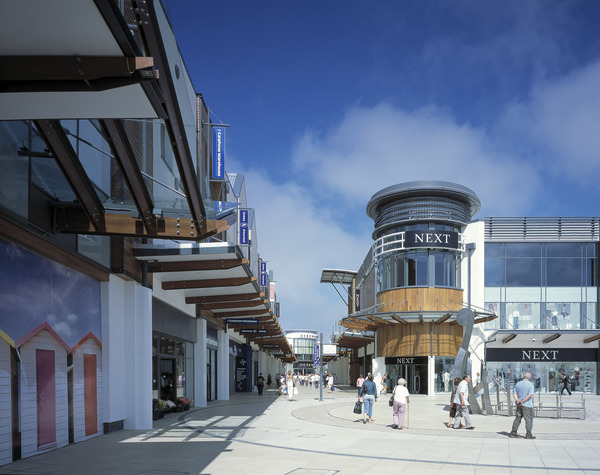
Our work at Westwood Cross in Thanet anticipated this shift away from the conventional shopping centre model, combining more than 30 shops and restaurants with leisure and employment uses around a pedestrianised arcade - the heart of a new town centre, not just another retail destination.
Trying to predict exactly what retail will look like in 20 years is unlikely to succeed. Designing buildings with the flexibility to respond to change is far more valuable - considering adaptability from the outset in the structural grid, servicing, access and circulation, so a building can accommodate different occupiers and uses without substantial reconstruction. Flexibility isn't an optional extra. It's part of an asset's long-term value.
Retail is about places, not just shops
Successful retail has never been solely about the transaction. People need a reason to visit, spend time and return, and as online shopping has made purchasing more convenient, the quality of the physical experience has become more important, not less.
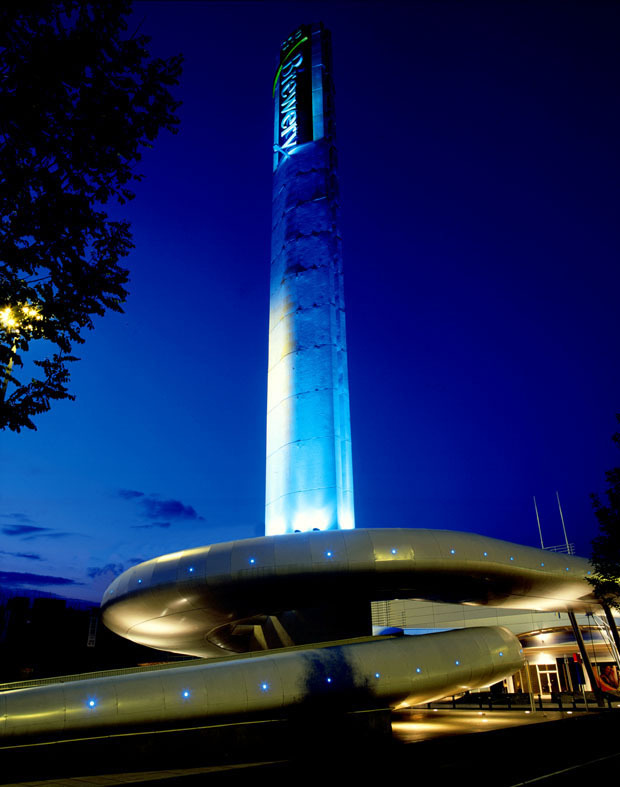
We saw this at The Brewery in Romford, where redeveloping the former Star Brewery created a new town-centre destination combining retail with cinema, restaurants and leisure. Retaining the historic brewery chimney gave the development a visible connection to the site's past, while new public routes reconnected it with the surrounding town.
The lesson still applies: the relationship between buildings, public realm, landscape and movement determines whether somewhere feels like a collection of units or a coherent place. The question is no longer just "how do we design a better retail building?" but "what role should this place play in people's lives?"
Sustainability starts with the architecture
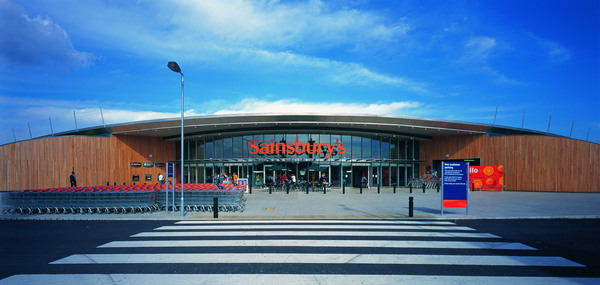
Sustainability has been part of Chetwoods' retail thinking for decades. Our Sainsbury's Millennium Store in Greenwich, completed at the turn of the millennium and shortlisted for the RIBA Stirling Prize, challenged the accepted model of supermarket design. Conceived as a low-energy store, it became the world's first supermarket to achieve BREEAM Excellent, using around half the energy of a conventional store at the time, with its environmental performance expressed through the architecture itself, not bolted on as technology.
The technology has changed enormously since Greenwich, but the underlying lesson hasn't: the biggest environmental gains usually come from fundamental design decisions made early. Today that thinking extends beyond operational energy to embodied carbon, materials, biodiversity, water and adaptability, and for existing retail assets, the most sustainable intervention may be adaptation rather than replacement. Before considering demolition, it's worth understanding the value already embedded in a building: its structure, materials, infrastructure and relationship with its community. Adaptability and sustainability are increasingly the same conversation.
Retail can be the catalyst, not the end result
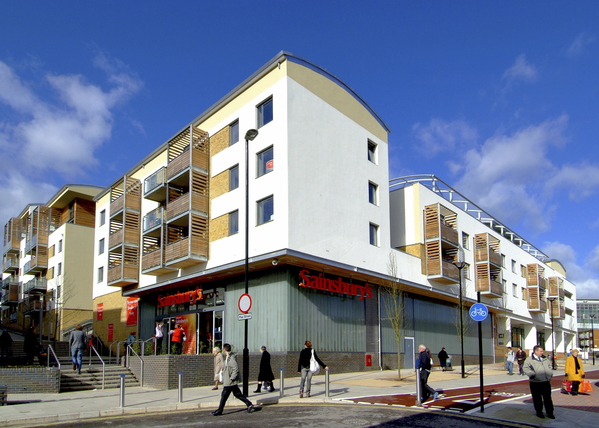
Some of the most interesting retail projects are those where retail is only one part of a much bigger urban proposition. At New England Quarter in Brighton, a supermarket was integrated into the regeneration of a 15-acre former railway goods yard alongside homes, commercial uses and public space, demonstrating how a large retail use can form part of a denser mixed-use neighbourhood rather than sitting apart from it.
That principle matters more as pressure on land intensifies. Retail sites often occupy large, well-connected pieces of urban land: car parks, servicing areas and ageing single-use buildings represent real opportunities for intensification: new homes, workplaces, landscape and community uses. The challenge is no longer simply replacing one retail format with another. It's understanding what additional value an established retail site can create for the wider place.
Understand how people really behave
Good retail design begins with people. Over 35 years we've learned the value of understanding how customers actually move through, perceive and respond to places, rather than relying on conventional assumptions about circulation, visibility and dwell time, including the less tangible aspects: how scale, daylight, materials, landscape, colour, sound and spatial sequence shape whether somewhere feels welcoming, stimulating or stressful.
Chetwoods' ongoing research into people's emotional response to architecture builds on this. Data and digital tools help us understand performance, but successful places ultimately depend on human experience. Retail makes that relationship particularly visible - if people don't enjoy being somewhere, they have little reason to stay.
Digital and physical retail are no longer separate
The other profound transformation has been the convergence of physical and digital retail. Our work with Sainsbury's at Westwood Cross was an early marker in our own digital journey. The second phase was delivered as a BIM pilot for the retailer, using a coordinated 3D Revit model to develop and communicate design information.
Since then, digital delivery and retail have both moved on dramatically. Customers now research products online, visit stores, order digitally and collect locally, or view an item in person before buying it later through another channel. Behind that seamless experience sits an increasingly complex network of stock, data, servicing and fulfilment.
Our experience across both retail and industrial and logistics gives us a useful perspective on this convergence: the store and the supply chain can no longer be considered independently. Servicing, storage, deliveries, click-and-collect and last-mile logistics increasingly shape the architecture of retail places themselves.
What comes next?
Artificial intelligence, automation, new fulfilment models, changing demographics and evolving attitudes to consumption will keep reshaping retail. But 35 years of experience suggests that predicting individual trends matters less than creating resilient places capable of absorbing them.
Looking back across projects from Greenwich and The Brewery to New England Quarter and Westwood Cross, many of the ideas now shaping retail's future - low-energy design, mixed use, experience, adaptability, digital coordination - have been developing for decades.
For Chetwoods, the enduring principles are clear: understand people; design for change; make better use of what already exists; connect architecture with landscape and public realm; integrate physical and digital infrastructure; and think beyond the requirements of the first occupier.
The future of retail won't be defined by a single format. It will belong to places capable of evolving. After 35 years, perhaps the simplest lesson is the most important one: don't design retail for what comes next. Design it so that whatever comes next can belong there.
Article tags
Share this insight
Related projects


