latest
The Future is Visible: Celebrating Technology Through Data Centre Design

Louis Fantis
.jpg)
For too long, the architecture of data centres has been defined by what it attempts to hide. Behind solid façades and security fencing sit some of the most technologically sophisticated environments ever created, yet externally they are often indistinguishable from warehouses. As these facilities become permanent, prominent features of our towns and cities, that no longer makes sense.
The conversation around data centre development has traditionally been dominated by engineering: power, rack densities, cooling and programme delivery. These fundamentals aren't going anywhere. But as competition intensifies for sites, planning consent and investment, engineering excellence alone is no longer what separates a project that succeeds from one that stalls. Increasingly, that difference is design.
Buildings that hide nothing
Throughout history, our most significant infrastructure has celebrated rather than concealed its purpose. Victorian railway stations expressed engineering and movement. Bridges became symbols of structural innovation. Airports evolved into architectural expressions of speed and connectivity. Data centres deserve the same ambition.
At Chetwoods, our approach – informed by constructivist and high-tech architectural principles – allows engineering, structure and function to shape the building's architectural language from the outset, rather than dressing an engineered box in an ‘attractive’ façade after the fact. Structural rhythm, cooling strategy, servicing and elevation design work together, improving performance while creating a distinct identity.
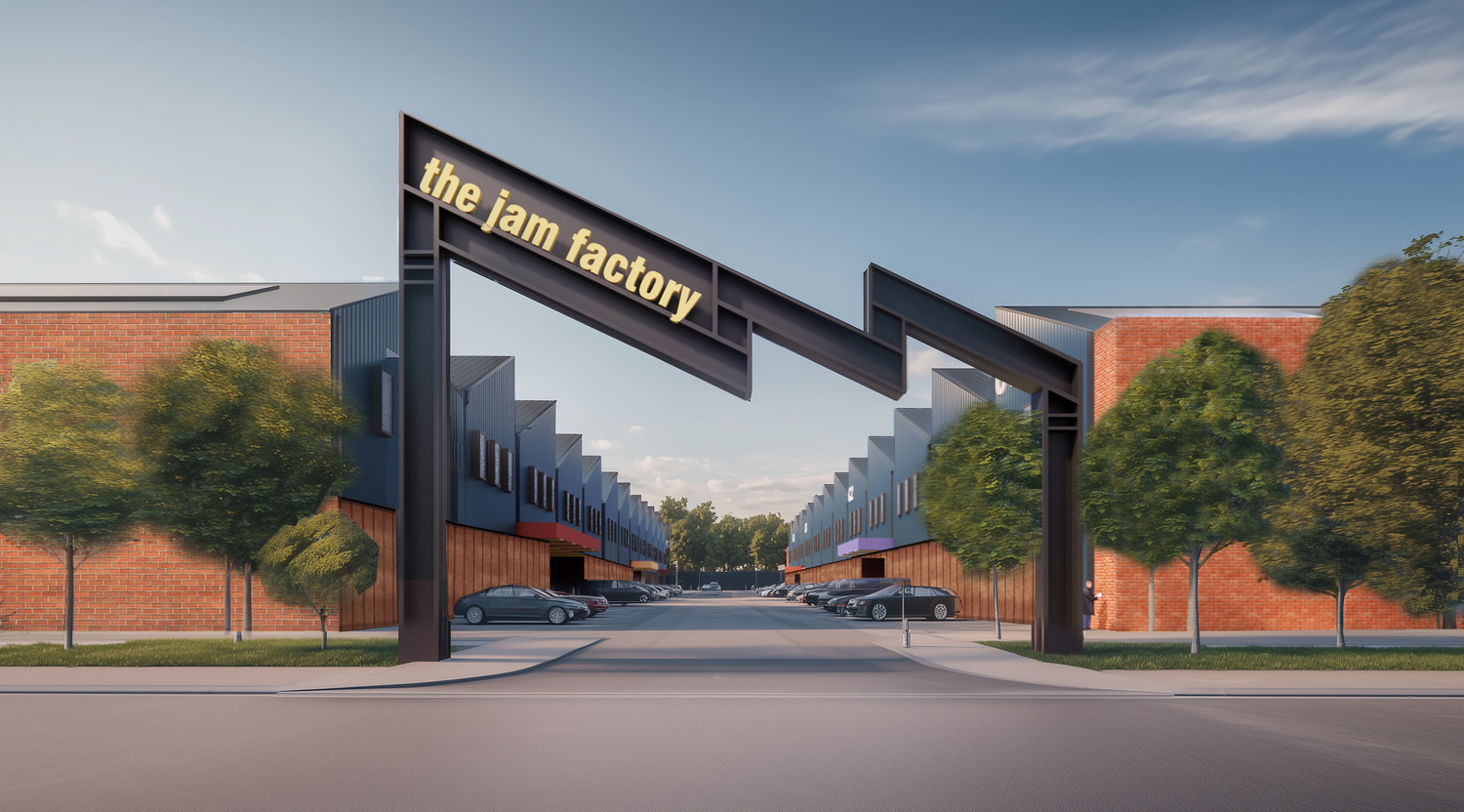
Our proposals for GTR Ealing (below) put this into practice: layered elevations inspired by the movement of digital information create depth, rhythm and shadow while responding directly to operational requirements and the site's industrial context.

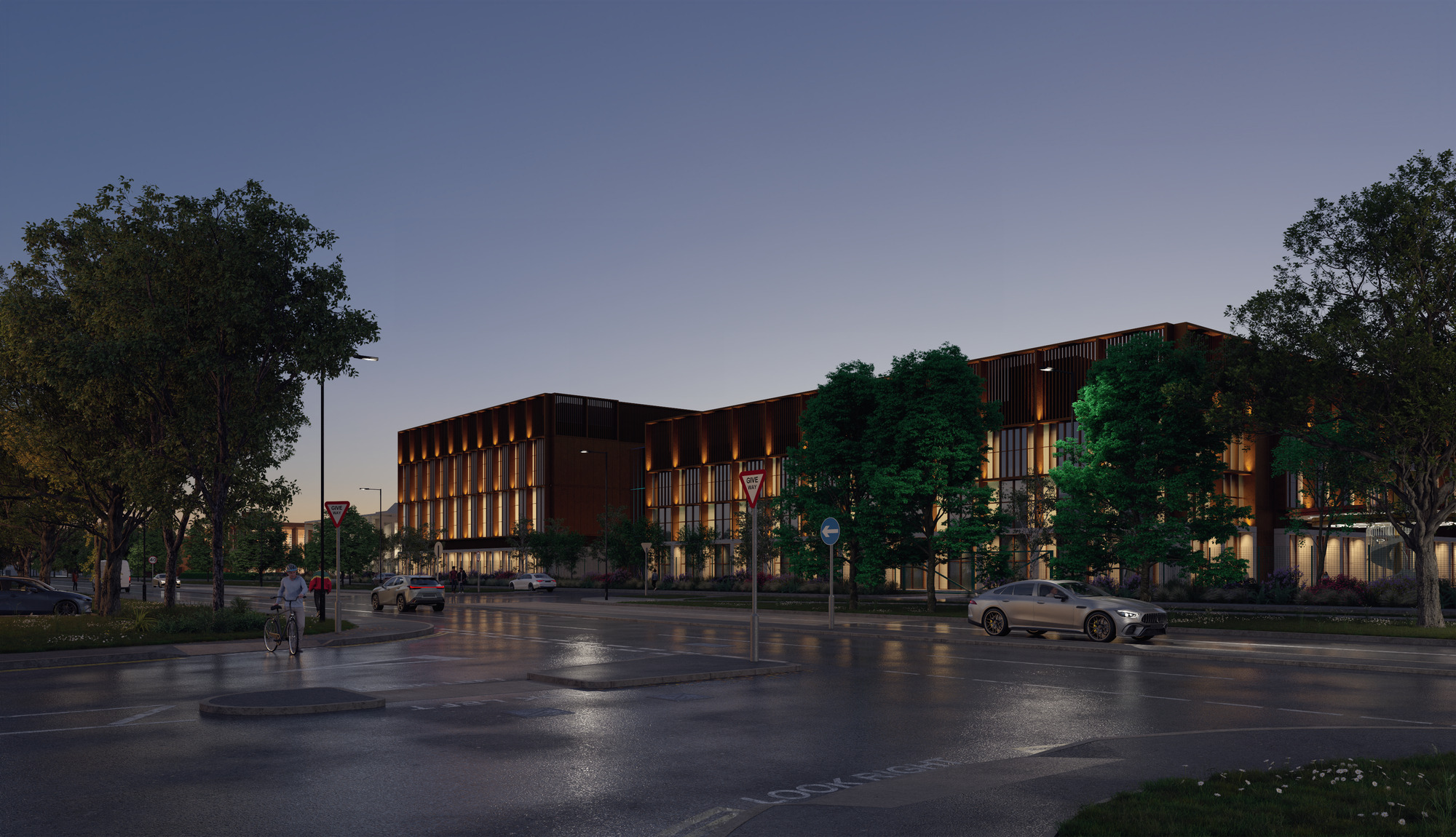
At 200 Bath Road, Slough (below), the site's Art Deco heritage shaped an architecture of strong vertical emphasis and refined proportion, demonstrating that highly secure digital infrastructure can respond positively to a prominent urban setting without compromising resilience.
As engineering solutions become more standardised, architecture provides an important opportunity to create genuine distinction, with benefits for planning, community acceptance, investment and long-term asset value.
Design decisions are commercial decisions
A persistent misconception is that architecture begins once the engineering is resolved. In practice, many of the decisions that determine a data centre's long-term performance – site planning, orientation, structural grids, servicing strategy, form, façade and landscape – are made at the earliest design stages, by architects working alongside engineers, not after them.
When architecture and engineering are developed as one integrated process, the benefits compound: greater programme certainty, lower delivery risk, more efficient construction and buildings that are easier to operate, adapt and maintain over the long term. Projects that demonstrate efficient design, environmental responsibility and operational resilience are increasingly those best placed to secure consent, satisfy investor due diligence and retain their value.
Changes to the planning system make these early design decisions even more important. Large-scale data centres can now opt into the Nationally Significant Infrastructure Project (NSIP) regime, allowing qualifying schemes to follow the Development Consent Order (DCO) process, with decisions ultimately taken by the Secretary of State rather than determined through the conventional local planning route.
This is more than a procedural change. It has implications for who we design for, how schemes are assessed and when key design decisions need to be resolved.
The DCO process places considerable emphasis on consultation and evidence gathering before an application is submitted, leaving less scope for the iterative, locally negotiated design refinement associated with conventional planning applications. Environmental performance, energy strategy, landscape, community impact and other key considerations therefore need to inform the architecture from the earliest concept stages.
At Chetwoods, our data centre teams are responding by integrating sustainability, energy and community engagement evidence into early design development rather than treating these as later-stage additions. For developers, getting these decisions right earlier can reduce planning and programme risk while creating a clearer, more robust case for development.
Success is no longer measured only by how quickly a data centre can be built. It is measured by how intelligently it has been designed to perform, gain consent, evolve and last.
Designing better neighbours

Access to power remains fundamental, but securing planning consent increasingly depends on how a facility responds to the place in which it is built. Too often, security has been expressed through fencing, defensive barriers and inward-looking layouts, reinforcing the perception of the data centre as an isolated compound. Robust security will always be essential, but it doesn't have to come at the expense of the surrounding environment.
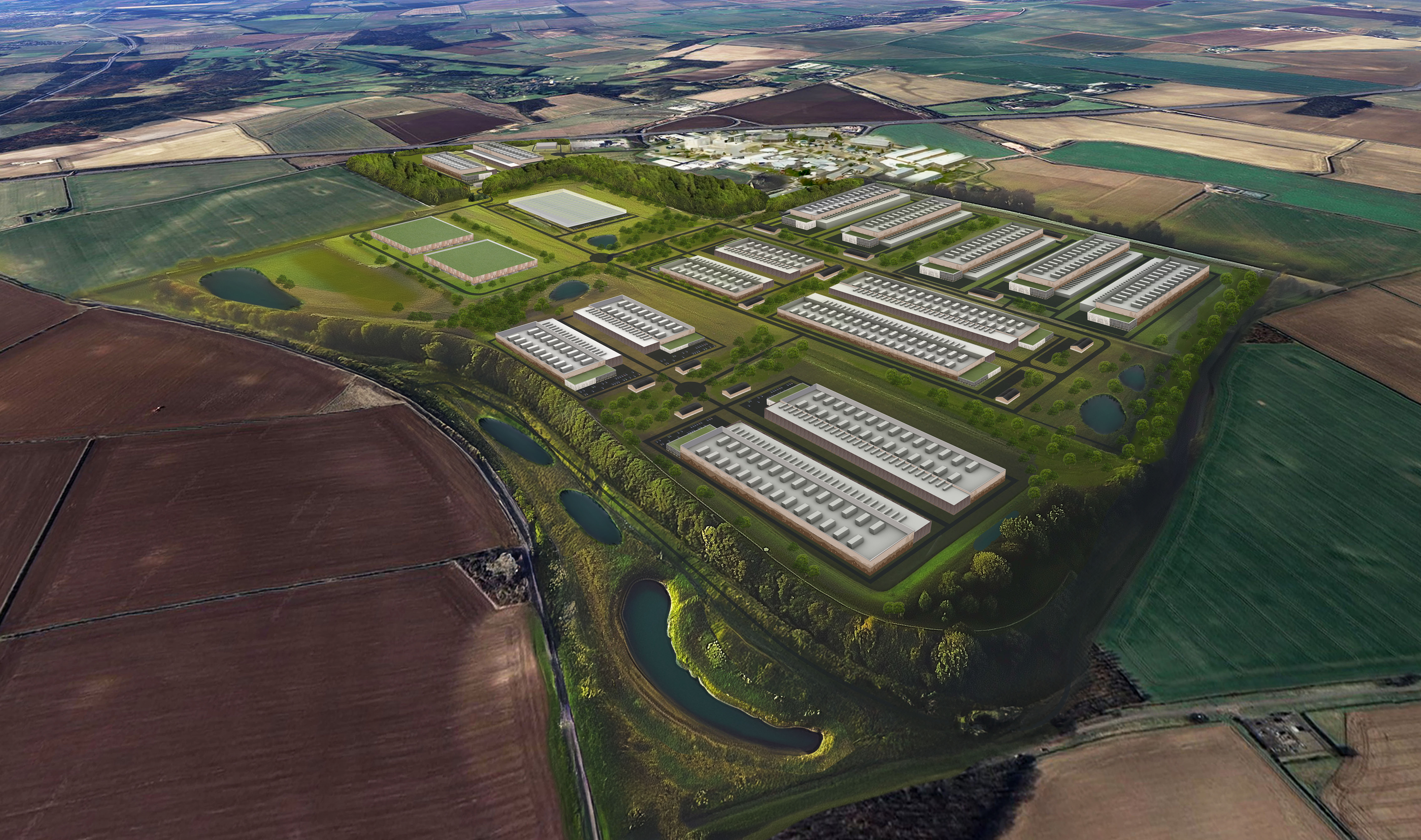
Landscape can do double duty here. Earth bunds, ha-has, modelled landforms, swales and woodland planting can provide passive security while reducing visual impact, enhancing biodiversity, managing surface water and creating better settings for neighbouring communities. Rather than treating security, sustainability and placemaking as separate requirements, a well-designed landscape strategy can deliver all three.
Design quality isn't enough on its own – it needs to be supported by genuine early engagement.
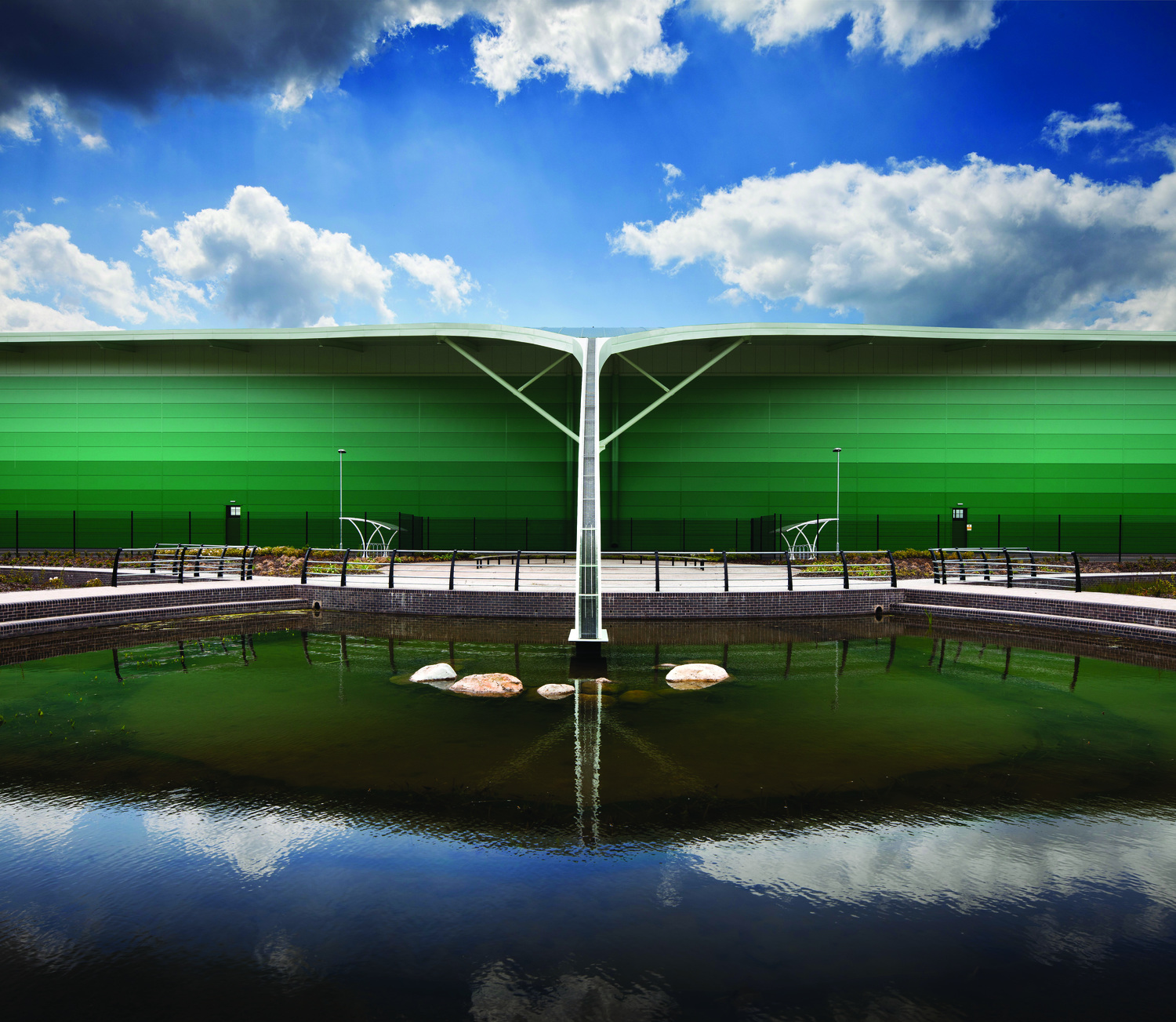
On projects such as Chatterley Valley Blue Planet, (below) early consultation helped shape proposals, respond to local priorities and build confidence in their long-term benefits. The same principle increasingly applies to data centres, where community acceptance can be an important factor in securing consent.
For projects pursuing the DCO route, that early engagement becomes more significant still. With consultation concentrated at the front of the process, architects have an important role in translating technical infrastructure into proposals whose environmental, visual and community impacts can be clearly understood, and demonstrating how design has responded to them.
Designing for what hasn't been invented yet
AI is driving rack densities and thermal loads higher, accelerating the adoption of direct liquid cooling, hybrid systems and heat recovery. No developer can predict with certainty which technologies will dominate in ten or fifteen years, which means buildings can no longer be designed solely around today's preferred solution.
This is an architectural question as much as an engineering one. Orientation, massing, façade design, structural grids and servicing zones all influence how readily a building can accommodate new technologies without extensive reconstruction. Flexible structural grids, generous servicing zones and modular construction can extend operational life, reduce future capital expenditure and keep facilities attractive to successive generations of occupiers.
Hyperscale occupiers and institutional investors are already considering adaptability during due diligence, assessing not just what a facility can do today, but how effectively it can respond to what comes next. The most successful data centres won't try to predict the future. They'll be designed to embrace it.
Adaptability is also increasingly a sustainability strategy. A building capable of absorbing technological change without extensive demolition and reconstruction has a lower lifetime environmental impact than one that becomes prematurely obsolete. The longer a building remains operationally relevant, the greater the return on the carbon already invested in constructing it.
Looking ahead
The data centre industry is at a pivotal moment. Demand for digital infrastructure has never been greater, and expectations have never been higher. Developers must deliver faster, accommodate rising power densities, respond to rapidly evolving cooling technology and meet increasingly demanding environmental and planning requirements, while protecting commercial viability.
The changing consenting landscape reinforces the importance of getting the architecture right from the beginning. As some of the UK's largest data centres move towards a nationally significant infrastructure model, design, sustainability, environmental evidence and community engagement will need to develop together much earlier in the process.
Meeting that brief takes more than engineering excellence. As data centres become permanent fixtures of our towns, cities and strategic employment locations, they need to perform not only as efficient technical facilities but as well-designed, adaptable and responsible pieces of national infrastructure, with the same design ambition we would expect of an airport or railway station.
At Chetwoods, we bring architecture, sustainability, digital innovation and technical delivery together from the earliest stage of every project, because the buildings enabling tomorrow's digital economy should be every bit as intelligent, adaptable and resilient as the technologies they support.
Louis Fantis, Director and Head of Data Centres at Chetwoods, said:
“Architecture is becoming one of the data centre industry's greatest competitive advantages. It brings together performance, sustainability, adaptability and placemaking in a way that engineering alone cannot.
“As AI transforms digital infrastructure and the planning landscape evolves, the buildings that stand the test of time will be those designed to evolve, integrate positively with their surroundings and create lasting value for developers, occupiers and communities alike.”
Author

Louis Fantis is a Director at Chetwoods and leads the practice's Data Centres sector. He specialises in the design, masterplanning and delivery of hyperscale, co-location and AI-ready data centre developments, combining architectural excellence with technical innovation, sustainability and commercial performance.
With extensive experience across data centres, industrial, logistics and infrastructure projects, Louis has led the design of complex technology campuses and nationally significant developments throughout the UK. His work focuses on creating future-ready digital infrastructure that balances operational efficiency, adaptability and environmental responsibility with high-quality architectural design.
Recognised for his expertise in the evolving data centre sector, Louis regularly contributes to industry research, thought leadership and strategic discussions on the future of digital infrastructure. He was recently invited by Minister for Artificial Intelligence Kanishka Narayan MP and the Royal Institute of British Architects (RIBA) to participate in a Department for Science, Innovation and Technology (DSIT) roundtable helping shape the Government's RIBA x DSIT Data Centre Design Challenge, exploring the future of UK data centre design.
Article tags
Share this insight
Related projects


