latest
As featured recently in the AJ Chetwoods director Louis Fantis highlights that the explosive growth of data centres presents architects with both opportunity and responsibility.

Louis Fantis

As featured recently in the AJ Chetwoods director Louis Fantis highlights that the explosive growth of data centres presents architects with both opportunity and responsibility.
While historically treated as anonymous sheds on out-of-town sites, data centres are now moving closer to residential and urban contexts. This shift fundamentally changes the architectural approach. He stresses that architects must balance highly constrained internal technical requirements - cooling, power density, rack layouts and zero tolerance for lost floor area - with external pressures including planning, sustainability targets, rights-of-light concerns and community expectations.
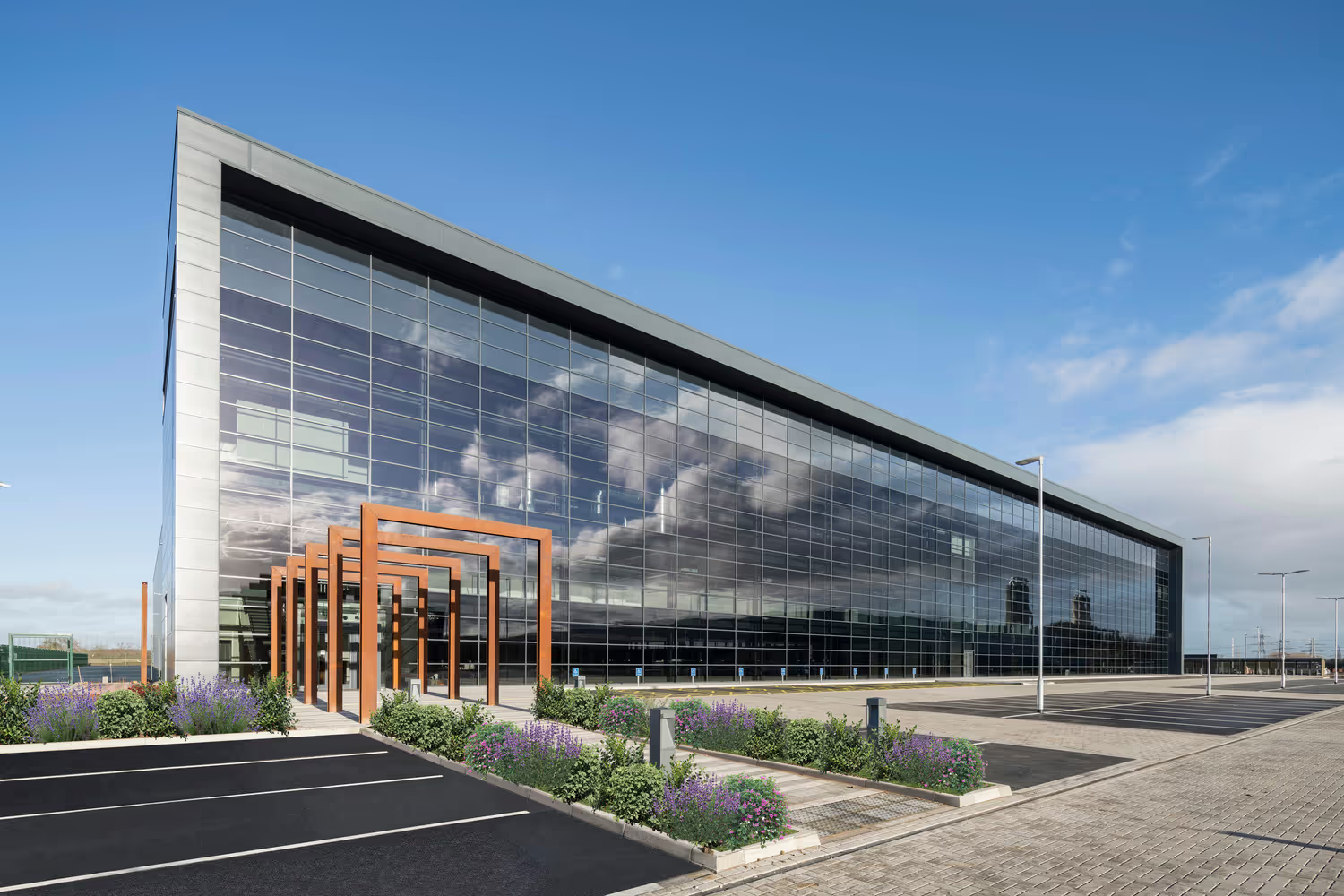
Unlike residential schemes, data centres offer virtually no flexibility in internal space: even minor reductions in volume can undermine viability. As a result, architectural value lies not in reshaping the box, but in elevating its expression. Careful massing, façade articulation, materiality and landscape design become critical tools in integrating these large, windowless buildings into sensitive settings.
.jpg)
Louis notes that projects such as Chetwoods’ Slough scheme - designed within sightlines of Windsor Castle and Eton College Chapel - required contextual architectural thinking, replacing the typical “soulless shed” with an Art Deco-inspired façade and public-facing landscaping strategy.
Ultimately, he argues that as data centres become essential civic infrastructure, architects must adopt a different mindset: protecting technical performance while ensuring these buildings positively contribute to their urban and environmental context.
Link to full AJ article 'Data centre construction is flourishing. But with these giant sheds increasingly needed close to urban areas, what role can architects play in their design?' here
Article tags
Share this insight
Related projects
.jpg)

%20copy.avif)
