latest
Rethinking Material Selection in the Wake of UK Steel Tariffs
.jpg)
From 1 July 2026, the UK government will introduce new restrictions on tariff-free steel imports, applying a 50% duty to volumes above quota. For the built environment, the implications are immediate: increased material costs, greater procurement volatility and further pressure on already complex delivery programmes.
For an industry already navigating inflation, carbon regulation and supply chain uncertainty, the announcement raises an important question: how resilient are our current construction models?
At Chetwoods, we believe this moment should not simply be viewed as a procurement challenge. It should be recognised as an opportunity to accelerate the transition towards lower-carbon, more resource-conscious construction methods - particularly structural timber, hybrid timber systems and lower-carbon steel.
Timber is no longer an emerging material. From Glulam and CLT to increasingly sophisticated hybrid structural approaches, timber has become a proven and commercially viable solution across a growing range of sectors and building typologies.
Unlike steel and concrete, timber sequesters carbon rather than emitting it during production. It also enables lighter structures, reduced embodied carbon and highly efficient off-site manufacturing and assembly. Beyond performance metrics, timber creates healthier, more biophilic environments that improve the human experience of buildings.
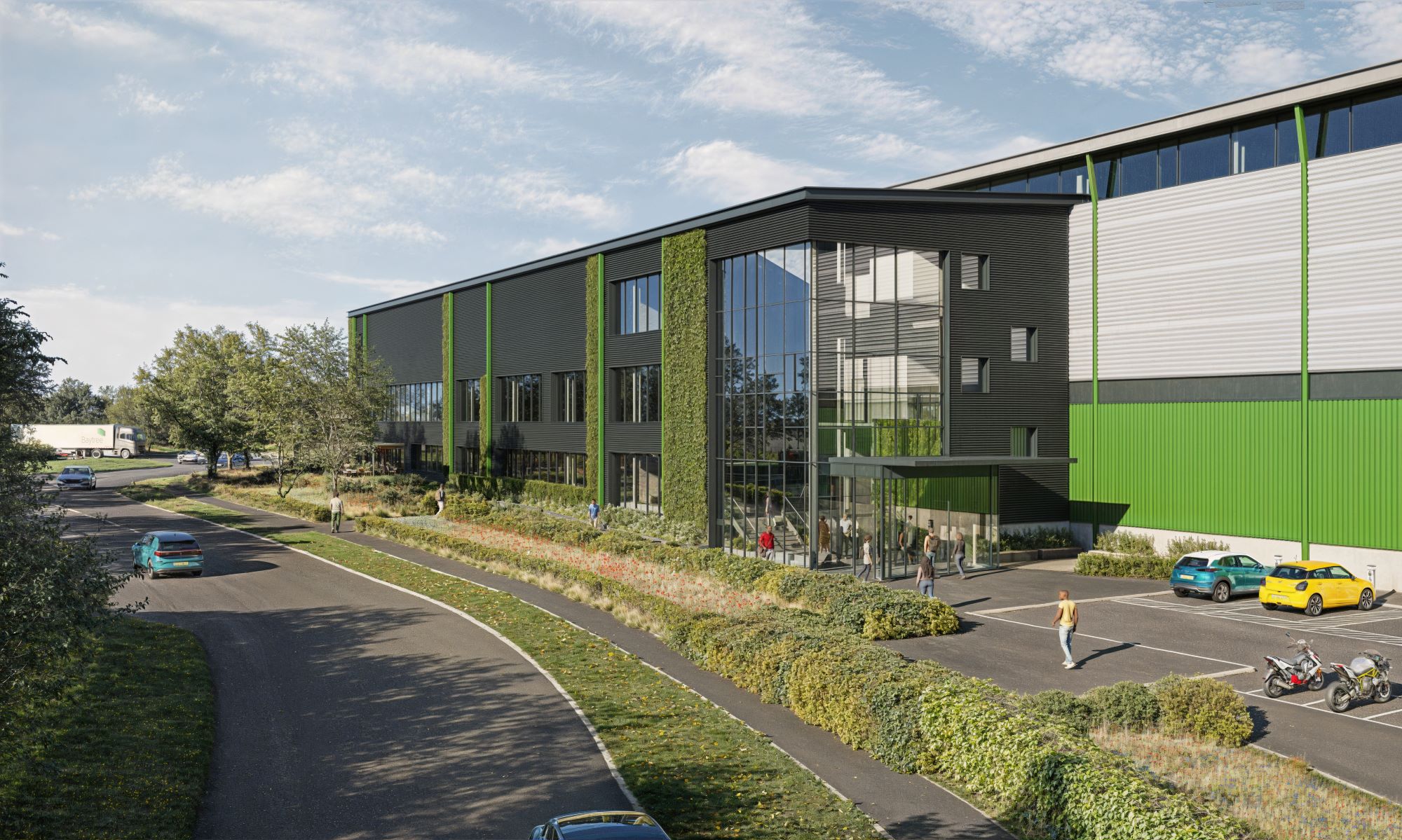
At Chetwoods, we have been designing with responsibly sourced timber for many years across logistics, commercial, workplace and cultural projects. Most recently, our research into hybrid structural timber systems for the logistics sector has explored how timber can work alongside steel and concrete to deliver practical, scalable pathways towards lower-carbon industrial development.
Importantly, this is not about positioning timber as a universal replacement for steel. Steel remains critical to many aspects of construction and infrastructure. However, the increasing pressure on global steel supply chains reinforces the importance of material diversification and intelligent hybrid design strategies.
The reality is that the industry is already moving in this direction. The UK Government’s own Timber in Construction Roadmap identifies hybrid systems as a key mechanism for reducing emissions while supporting growth in domestic timber supply and manufacturing capability.
Importantly, this is not about positioning timber as a universal replacement for steel. Steel remains critical to many aspects of construction and infrastructure. However, not all steel carries the same environmental impact. Steel manufactured in electric arc furnaces (EAFs), particularly where production is powered by renewable electricity, can significantly reduce embodied carbon compared with traditional blast furnace production. As demand grows for lower-carbon construction, specifying responsibly produced steel alongside structural timber offers a practical route to reducing whole-life carbon while maintaining structural performance.
The opportunity extends beyond how steel is manufactured to how it is used. At Chetwoods, our award-winning RESTOR project is exploring how technology can unlock the reuse of structural steel by identifying, assessing and cataloguing reclaimed steel sections for future projects. By extending the life of existing materials and reducing the need for newly manufactured steel, RESTOR demonstrates how circular economy principles can complement lower-carbon material specification and help build greater resilience into the construction supply chain.
For developers, investors and occupiers, the conversation is rapidly shifting beyond sustainability alone. Questions of resilience, programme certainty, supply chain security and long-term asset value are now equally important.
The steel tariffs may introduce short-term disruption. But they also reinforce a much bigger transition already underway: a move towards more adaptable, lower-carbon and materially resilient forms of construction.
The challenge for the industry is no longer whether timber has a role to play. It is how quickly we are prepared to scale it.
Article tags
Share this insight
Related projects
.avif)